
Sheep’s wool insulation: warm, natural and easy to live with
Wool is our favourite thing to talk about. It keeps heat in about as well as mineral wool, is soft to handle and copes well with damp air.
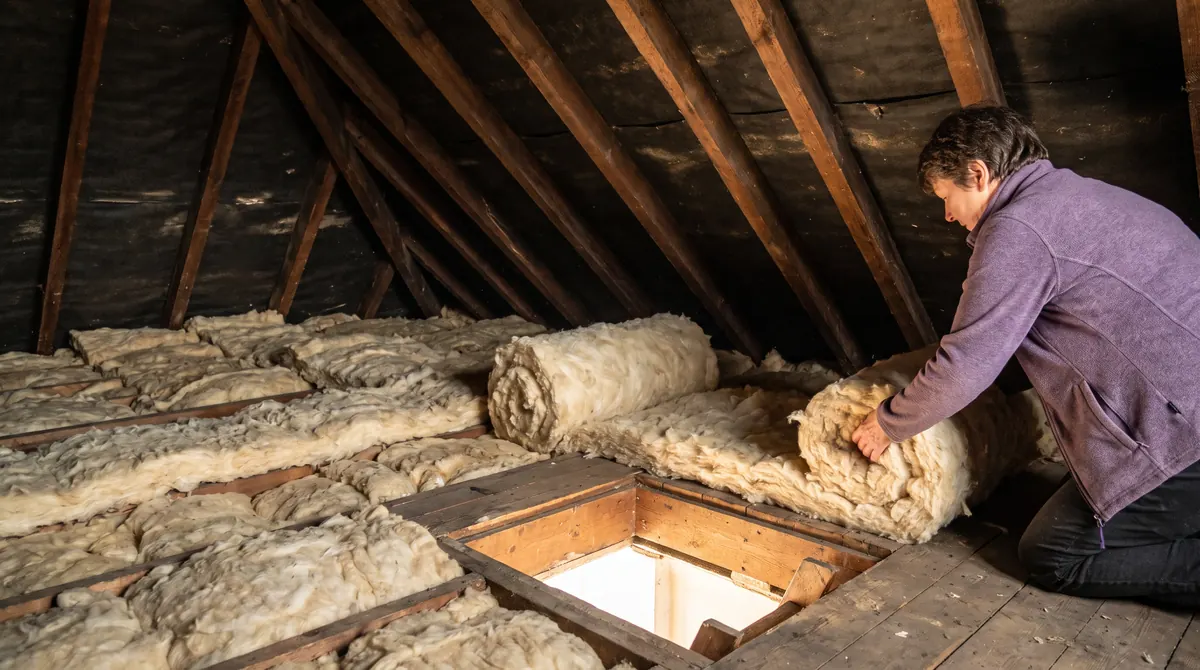
Illustration: sheep’s wool laid between the joists
| What it is | Washed sheep’s wool, treated against moths, often with a polyester binder |
|---|---|
| Comes as | Soft rolls and slabs |
| Where it goes | On the loft floor, between and across the joists |
| Good for | Older homes, people who use the loft often, anyone who prefers natural fibres |
| Worth knowing | Costs more than mineral wool |
Why people choose it
Wool is a renewable fibre. It isn’t itchy, so it’s pleasant to handle and there’s little dust in the loft afterwards. It can take up moisture from the air and release it again without losing much of its warmth, which suits older houses with solid walls and lime plaster.
How well it works
Depth for depth, wool insulates about as well as mineral wool. You don’t trade warmth for a natural material; the difference is in how it feels, how it handles moisture and what it costs.
How we fit it
Exactly as we fit any wool: between the joists on the loft floor, then a second layer across them, with the eaves left clear. Your quote can show wool alongside mineral wool so you can weigh the cost.
Common questions
Is sheep’s wool better than mineral wool?
Will moths eat it?
Can it go over my old insulation?
Find out what your loft needs, in plain words
Tell us about your home. We’ll explain the options and send a written quote. No obligation.