
Newer homes: checking the insulation you were given
Newer homes usually come with decent loft insulation, but it’s worth checking it was laid evenly and hasn’t been squashed by storage.
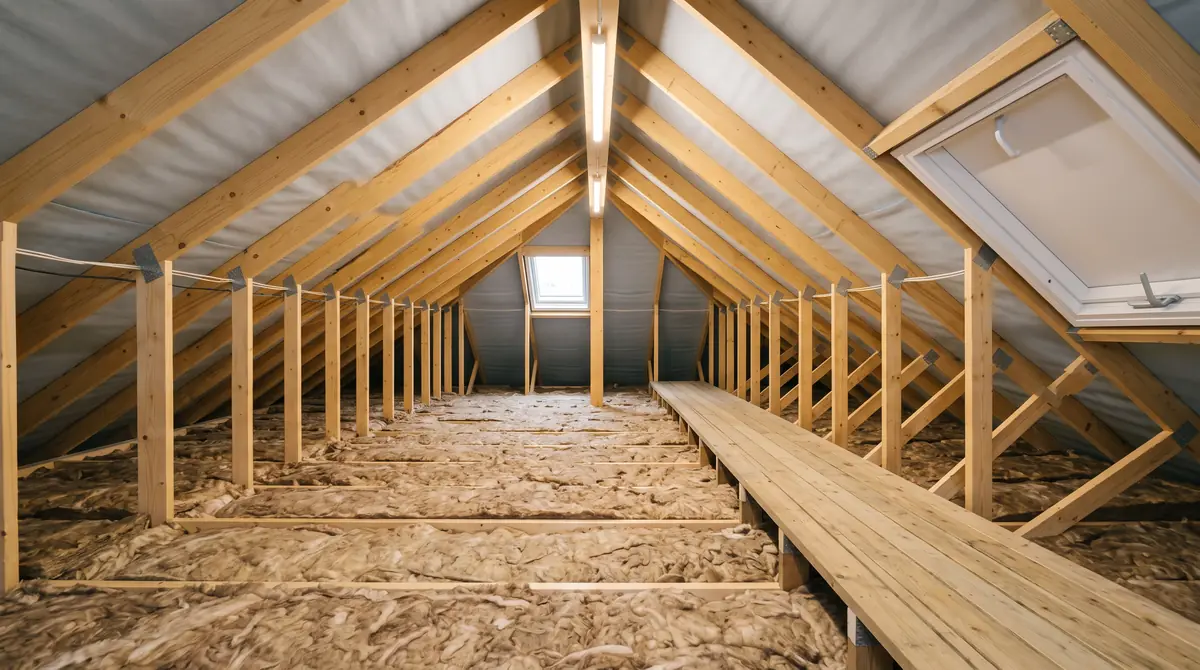
Illustration: a new-build loft
| Typical loft | Trussed roof, breathable membrane, insulation already laid |
|---|---|
| What to check | Even depth, gaps at the edges, squashed patches |
| Common job | Raised storage over existing insulation |
| Airflow | Usually designed in; keep it clear |
Is it already done?
Most newer homes are built with loft insulation in place. Problems come later: boards laid straight on top, patches disturbed by cables or the aerial installer, and edges that were never filled.
What we usually do
Check the depth and coverage, fill any gaps, and fit raised storage so the insulation isn’t flattened. Many new-build owners call us for storage, not insulation.
Look after it
Avoid laying boards directly on the joists or piling boxes on the insulation; both squash it and let heat out.
Common questions
My new house already has insulation. Do I need more?
Often not much. We check for squashed or patchy areas and tell you honestly.
Can I board my new-build loft?
Yes, on a raised floor above the insulation. Trusses must not be cut.
Who should I call if the builder got it wrong?
Your builder first, if it’s under warranty. We can still look and advise.
Find out what your loft needs, in plain words
Tell us about your home. We’ll explain the options and send a written quote. No obligation.