
Victorian and Edwardian terraces: a gentle approach to an old loft
Old terraces have narrow lofts, solid brick party walls and timbers that like to stay dry. Breathable insulation and good airflow suit them well.
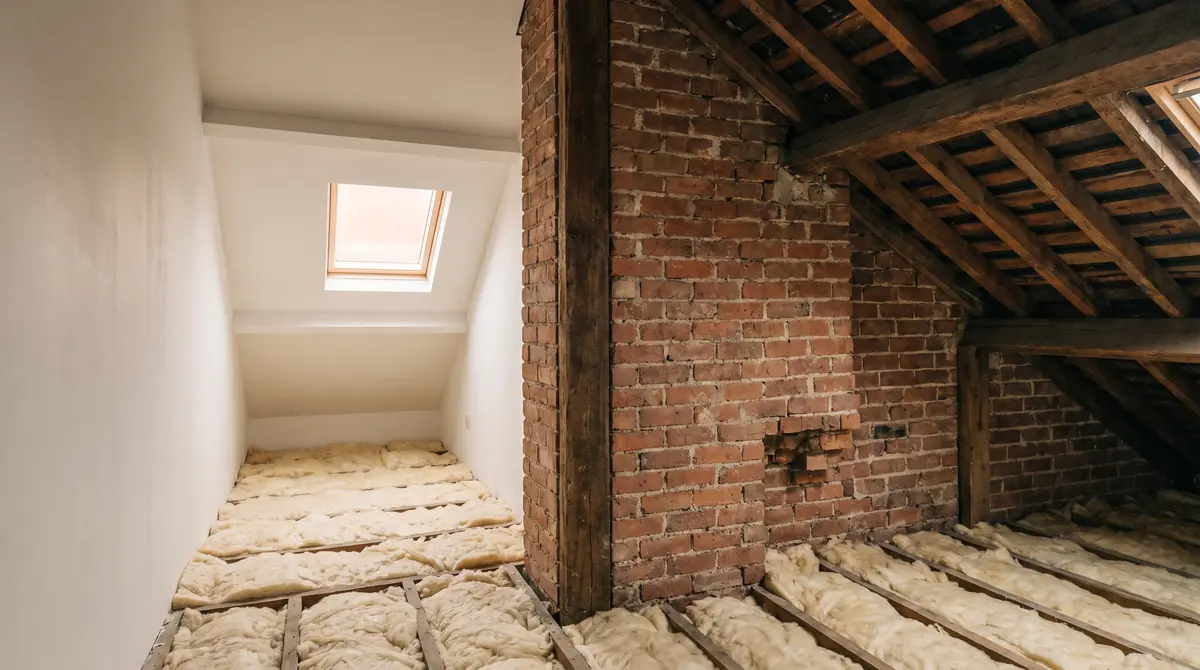
Illustration: a terrace loft with natural wool
| Typical loft | Narrow, with brick party walls and a chimney breast |
|---|---|
| What suits it | Breathable materials such as sheep’s wool, laid on the floor |
| Watch for | Gaps through the party wall, old wiring, damp |
| Airflow | Often little natural ventilation; vents may be needed |
What makes these lofts different
Victorian and Edwardian roofs are often slate over timber, with solid brick party walls either side and a chimney breast rising through the middle. Many have had little done since they were built, or a thin layer added decades ago.
A material that breathes
Older houses manage moisture differently from modern ones. Sheep’s wool, which takes up and gives back moisture, is a comfortable fit, though mineral wool works too when the loft is well ventilated. Either way it goes on the floor, between and over the joists.
Things we check
Gaps in the party wall where air and sound pass through, old cables that need lifting clear, and whether the roof has enough airflow once the loft is insulated.
Common questions
Is sheep’s wool best for a Victorian house?
My loft is very narrow. Can it still be insulated?
Do I need to worry about the party wall?
Find out what your loft needs, in plain words
Tell us about your home. We’ll explain the options and send a written quote. No obligation.