
1930s semis: making the most of a roomy hipped loft
The classic between-the-wars semi has a hipped roof, a generous loft and sturdy timbers. There’s usually plenty of room to insulate well and store too.
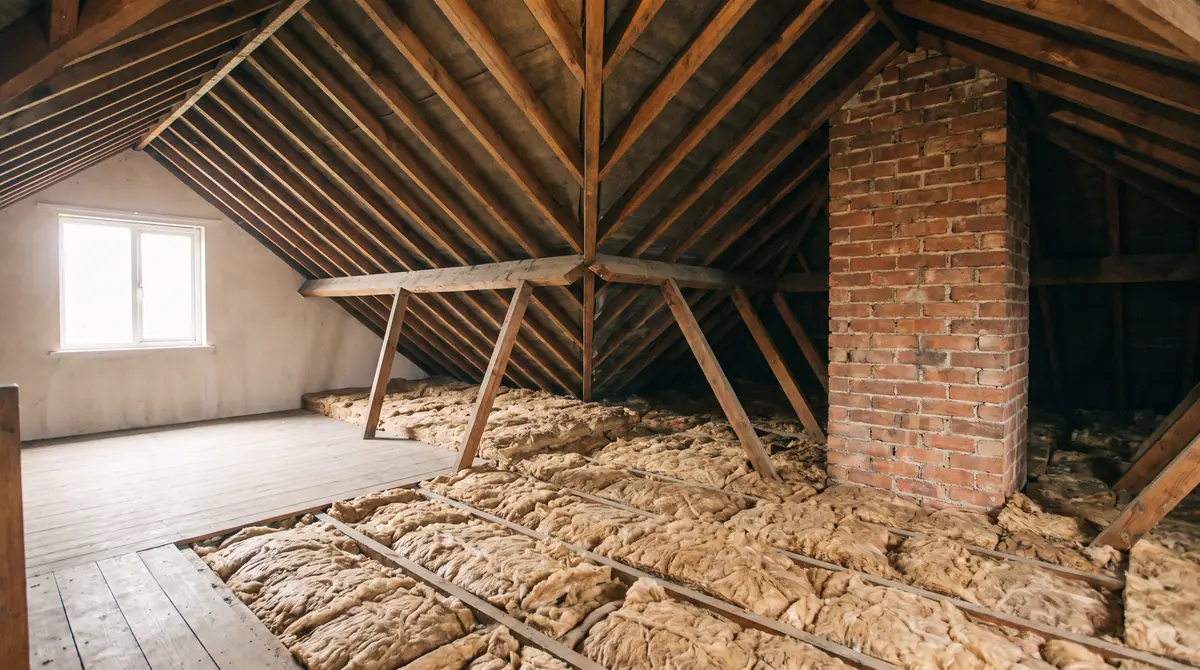
Illustration: a 1930s semi loft
| Typical loft | Hipped roof, purlins and struts, a chimney breast |
|---|---|
| What suits it | Deep wool over the whole floor; raised boarding for storage |
| Watch for | Old thin insulation, water tanks, cables |
| Airflow | Usually good; keep the eaves open |
A loft with room to work in
1930s semis often have tall, roomy lofts with timber purlins and struts holding up a hipped roof. That makes them easy to insulate well, and many families also want to store things up there.
What we usually find
A thin layer from years ago, an old water tank, and cables lying under or through the insulation. We bring the depth up, lag the tank and pipes and lift the cables.
Storage without squashing
If you want to use the space, a raised floor over part of the loft keeps the insulation at full depth underneath.
Common questions
Can I have storage and full insulation?
Yes, with a raised floor on legs above the insulation.
Do the struts get in the way?
We insulate around them. They stay, as they hold up the roof.
Is natural insulation worth it here?
It works well, but mineral wool is fine in a ventilated 1930s loft. Your quote can show both.
Find out what your loft needs, in plain words
Tell us about your home. We’ll explain the options and send a written quote. No obligation.