Mineral wool: the everyday loft insulation, explained
Most British lofts are insulated with mineral wool. It’s good value, works well and is partly made from recycled glass. Here’s what to know.
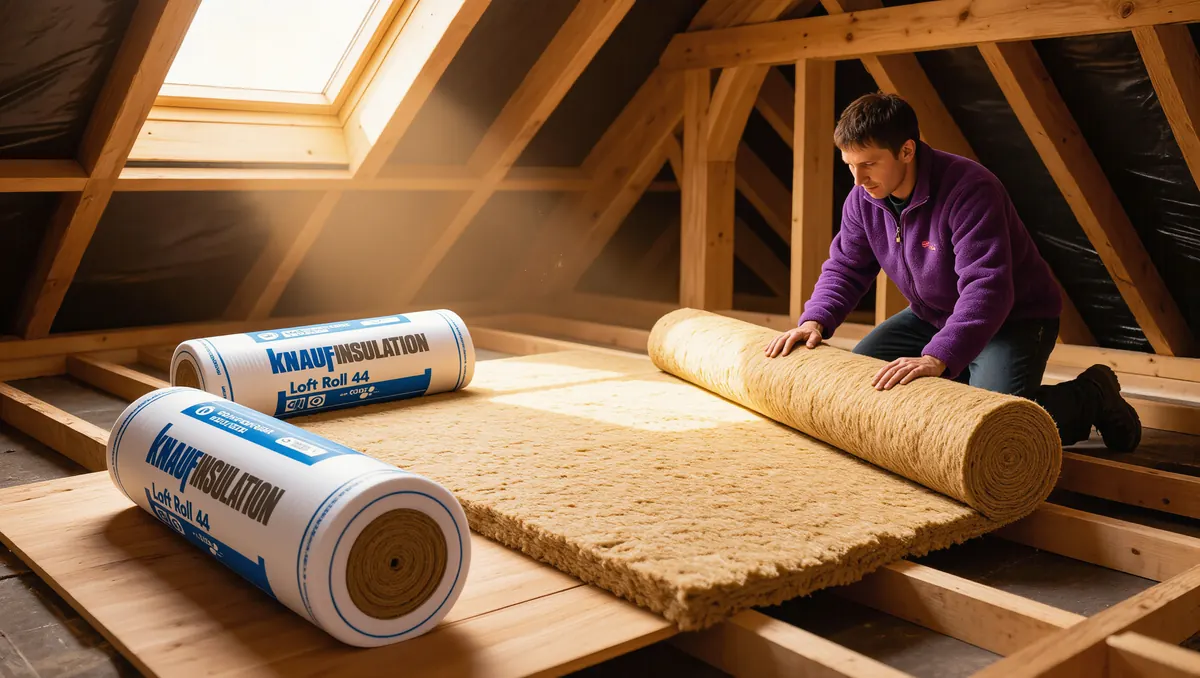
Illustration: mineral wool going down, spare rolls still packed
| What it is | Fibres spun from glass (often largely recycled) or stone |
|---|---|
| Comes as | Rolls laid between and over the joists |
| Where it goes | On the loft floor, between and across the joists |
| Good for | Almost any loft; the best value per square metre |
| Worth knowing | Can irritate skin while it’s handled; settles once laid |
What it is
Mineral wool is made by melting glass or stone and spinning it into fine fibres. Glass wool often contains a high share of recycled glass. It comes in soft rolls that are laid on the loft floor.
How we lay it
One layer goes between the ceiling joists and a second goes across them, so the timber is covered and the depth is even. The eaves are left clear for air, pipes and tanks above it are lagged, and cables are lifted on top.
How it compares
For the same depth, mineral wool keeps heat in about as well as sheep’s wool or recycled polyester. It costs less. The natural options are nicer to handle and, in the case of wool, cope better with moisture. If you’d like to compare, your quote can show more than one.
Common questions
Is mineral wool safe?
How deep should it be?
Does it contain recycled material?
Find out what your loft needs, in plain words
Tell us about your home. We’ll explain the options and send a written quote. No obligation.